Interlinked Reward Architectures in Mobile-First Wagering Systems

Modern mobile wagering platforms rely on layered incentive architectures that connect rewards across multiple game categories and payment touchpoints, allowing operators to maintain player engagement through synchronized loyalty mechanics and bonus pathways. These systems operate by treating slots, live dealer sessions, table games, and sports betting as nodes within a single network where activity in one area triggers value transfers to others through shared data protocols and tiered progression rules.
Foundational Elements of Cross-Game Networks
At the base level these architectures consist of centralized player profiles that aggregate data from disparate game engines while applying uniform reward multipliers and eligibility criteria across categories. Research from industry monitoring groups shows that such profiles enable real-time adjustment of bonus allocations based on combined wagering volume rather than isolated game performance. For instance a player completing a set number of sports wagers may unlock enhanced reel modifiers in slot sessions without separate qualification steps. Observers note that this unification reduces friction and increases session continuity across device sessions.
Payment gateways serve as critical junctions in the network because they process deposits and withdrawals that simultaneously update loyalty balances and trigger conditional rewards. Data from platform operators indicates that integrated gateways can route a single transaction to activate multiple incentive streams such as cashback credits applicable to live dealer tables or progressive jackpot contributions tied to table game stakes. This approach creates feedback loops where spending patterns in one vertical influence availability in others through algorithmic distribution rules.
Mobile Prioritization and Synchronization Protocols
Mobile-first environments demand lightweight synchronization protocols that maintain network integrity across variable connection speeds and device states. These protocols push updates to incentive ledgers whenever a player switches between game types or completes a qualifying action. Experts tracking platform performance report that seamless handoffs between mobile apps and browser sessions preserve accumulated progress without manual intervention. As of May 2026 several major operators have expanded these protocols to include predictive loading of bonus interfaces based on historical cross-category behavior patterns.
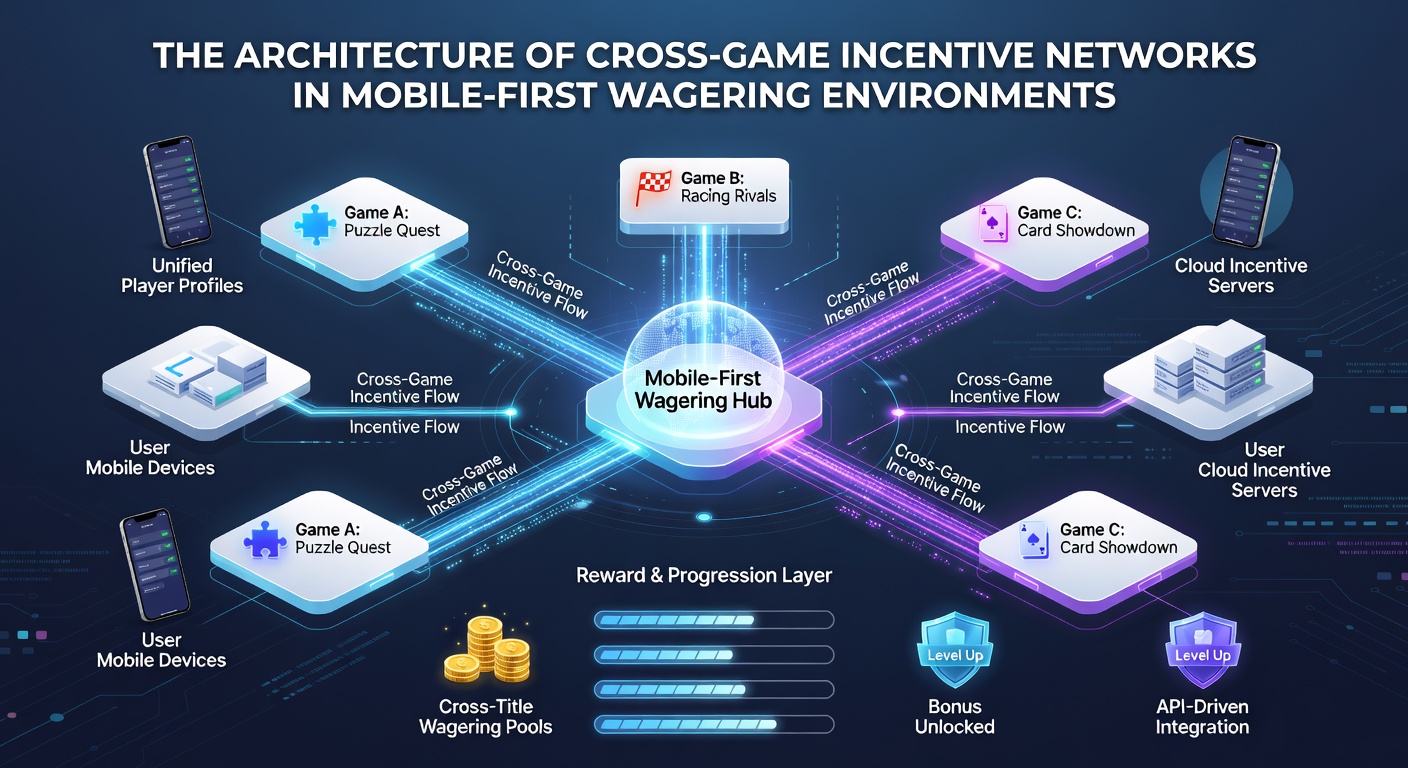
Real-time alert mechanisms further reinforce the network by notifying users of opportunities that span game boundaries. A deposit made through a mobile sports betting interface might immediately generate a multiplier token usable on progressive slot pools or live table side bets. Figures from technology providers reveal that these alerts rely on event-driven triggers that query the central incentive database before rendering personalized offers on the device screen.
Data Integration and Progression Mechanics
Progression systems within these architectures assign points or status levels based on normalized activity metrics that account for differing house edges and bet sizes across game types. Studies conducted by academic research teams have examined how weighted formulas prevent dominance by high-volume categories while still encouraging diverse participation. One documented case involved a tier system where sports betting volume contributed partial credit toward live dealer unlock thresholds, resulting in measurable shifts in player distribution across verticals according to aggregated platform telemetry.
Bonus portability represents another key feature where earned incentives retain validity when moved between game families through predefined conversion rates. This portability relies on backend reconciliation engines that adjust values to maintain economic balance for the operator. Those who have analyzed transaction logs across multiple jurisdictions note that such engines incorporate regulatory caps on transferable amounts to align with local compliance standards.
Technological and Oversight Frameworks
Implementation of these networks draws on modular software stacks that allow operators to add or modify incentive rules without disrupting core game functionality. According to reports published by the American Gaming Association, modular designs facilitate faster deployment of cross-promotional campaigns that link emerging mobile features such as in-play sports markets with established slot jackpot pools. Security layers encrypt the data exchanges that underpin these connections to prevent unauthorized alterations to reward ledgers.
Regulatory bodies in various regions require transparent logging of incentive flows to ensure fairness and prevent exploitation. Canadian provincial oversight entities for example mandate detailed reporting on how mobile wagering networks distribute promotional value across game categories. Similar requirements appear in frameworks administered by Australian state regulators where cross-game mechanics must demonstrate compliance with responsible gambling parameters.
Conclusion
The architecture of cross-game incentive networks continues to evolve through iterative refinements in data connectivity, mobile synchronization, and regulatory alignment. Platform telemetry collected through 2026 demonstrates sustained integration of formerly separate reward streams into unified systems that respond dynamically to player behavior across wagering environments. These developments rest on established technical foundations that prioritize continuity and measurable progression without reliance on isolated game silos.